

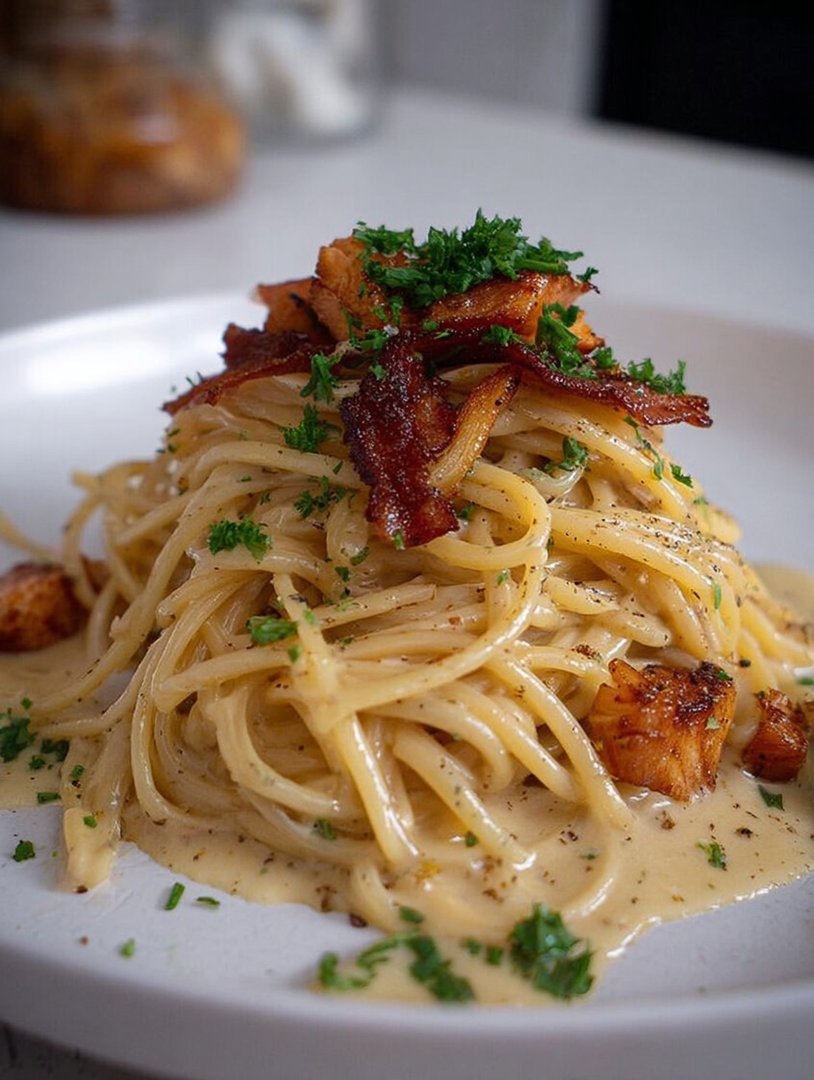
The first time I tasted the creamy, salty, umami explosion that is a true carbonara, I knew my life had peaked. Now, imagine taking that perfection and introducing it to the profound depth of Japan’s favorite fermented soybean paste—you get the sublime, unforgettable experience ofJapanese-Style Miso Carbonara.
This dish is proof that fusion cuisine doesn’t have to be complicated; it just needs a big bowl, hungry friends, and a serious dose of savory magic to brighten up any weeknight.
- Experience a radical flavor upgrade where the salty richness of cured turkey meets the deep, complex umami profile of authentic white miso paste.
- This quick dinner comes together faster than calling for takeout, offering sophisticated, restaurant-quality flavor with only seven core ingredients.
- Achieve the impossibly creamy, emulsified sauce without using heavy cream, relying solely on egg yolk magic and a splash of starchy pasta water.
- Perfectly versatile, this pasta dish pairs beautifully with simple greens or a crisp side salad, suitable for casual lunches or elegant dinners.
Ingredients for Japanese-Style Miso Carbonara
Here’s what you’ll need to make this delicious dish:
- Spaghetti or BucatiniUse a high-quality, bronze-cut pasta that holds the rich sauce well; bucatini’s hollow center is particularly excellent for sauce delivery.
- Smoked Turkey Beef Pancetta or CubesDice this lean protein finely to mimic traditional guanciale, providing a salty, savory chew without using restricted ingredients.
- Egg YolksThese are the heart of the carbonara, providing the essential richness and emulsification necessary for the creamy texture.
- Parmesan Cheese (or Pecorino Romano)Finely grate this sharp, salty cheese to mix seamlessly into the egg yolks, binding the sauce when heated.
- Shiro Miso (White Miso Paste)Choose a mild, sweet shiro miso for its balanced flavor, ensuring it melts into the sauce without overpowering the cheese and turkey.
- GarlicFinely mince one or two cloves to sauté with the turkey, providing a necessary aromatic background layer to the umami flavors.
- Black PepperFreshly crack a generous amount; the pungent spice cuts through the richness and is absolutely essential for authentic carbonara flavor.
The full ingredients list, including measurements, is provided in the recipe card directly below.
How to Make Japanese-Style Miso Carbonara
Follow these simple steps to prepare this delicious dish:
Step 1: Prep the Smoked Turkey and Pasta Water
Place a large pot of salted water over high heat and bring it to a rolling boil. While waiting, dice the smoked turkey beef pancetta into small, uniform cubes. In a separate, wide skillet large enough to hold the pasta later, begin heating the turkey over medium heat until the pieces are crisp and rendered—this takes about 8 minutes. Remove the crispy turkey bits, leaving the flavorful drippings behind in the pan.
Step 2: Prepare the Carbonara Miso Paste
In a medium bowl, vigorously whisk together the egg yolks, grated Parmesan cheese, white miso paste, and a significant amount of freshly cracked black pepper. Achieving a smooth, slightly thick paste is crucial here. If the mixture seems too stiff, hold onto it—a splash of hot pasta water will fix this later, so resist adding any liquid now.
Step 3: Cook the Pasta and Temper the Sauce
Drop the spaghetti into the boiling water and cook according to package directions, aiming for a true al dente texture. Before draining, reserve at least 1 cup of the starchy, hot pasta water—this liquid is the secret ingredient for emulsification. Drain the pasta quickly and immediately transfer it to the skillet containing the turkey drippings and minced garlic, tossing well to coat the noodles.
Step 4: The Critical Emulsification Stage
Remove the skillet completely from the heat source—this step is non-negotiable to prevent scrambling the eggs. Slowly add the egg and miso mixture to the hot pasta, tossing continuously and rapidly with tongs. Gradually drizzle in the reserved hot pasta water, a tablespoon at a time, until a creamy, glossy sauce forms, clinging beautifully to every strand of spaghetti. If the sauce looks dry, add more water; if it looks soupy, continue tossing rapidly until it tightens up.
Step 5: Finishing Touches and Presentation
Stir the reserved crispy smoked turkey cubes back into the creamy pasta. Taste and adjust seasoning, adding a touch more black pepper if desired. Work quickly and serve immediately, as carbonara is a dish that waits for no one, especially not a food blogger trying to get the perfect overhead shot.
Transfer to plates and garnish with a dusting of extra Parmesan and a sprinkle of chopped chives or scallions for the perfect finishing touch.
The first time I served thisJapanese-Style Miso Carbonarato my highly skeptical Italian-cuisine-loving family, the silence around the dinner table was deafening. They were not disappointed. What makes this dish a true revelation is the way the intense, earthy, and slightly sweet flavor of shiro miso replaces the deep savory notes usually provided by cured meat products. Miso doesn’t just substitute the saltiness; it amplifies the underlying umami, giving the sauce a richness that feels both traditional and wonderfully new. When executed correctly, the resulting sauce is pure gold: glossy, velvety, and entirely free of heavy cream, relying solely on the magic of egg yolks and starch.
Why Miso Elevates Carbonara
Carbonara is, fundamentally, a simple dish built on complex chemistry. The emulsion requires the heat of the pasta and the starchiness of the water to cook the egg yolks just enough to create a creamy coating without turning them into scrambled eggs. Traditional recipes rely solely on cheese and cured meat fat for flavor depth. Introducing miso into this mix is genius because miso is arguably the highest-concentration source of savory umami flavor available in a single pantry item. When you whisk the white miso into the egg and cheese mixture, it dissolves smoothly, distributing its fermented complexity throughout the base. This modification means that even if you are using a leaner protein, such as smoked turkey or beef, the miso compensates beautifully, ensuring that every bite delivers that deep, satisfying savory punch. It also adds a subtle sweetness, balancing the sharp salinity of the Parmesan and the heat of the black pepper, making the overall profile significantly more rounded and addictive. The difference between a standard carbonara and thisJapanese-Style Miso Carbonarais like the difference between a pleasant hum and a full orchestral performance.
While the classic Italian purists might clutch their pearls at the very suggestion of using miso, they would be hard-pressed to deny the profound depth it adds. This modification is not about disrespecting tradition; it’s about evolution and appreciation of global flavors. If you’ve ever found traditional carbonara lacking just a little something—maybe it felt a touch flat without the depth of quality cured meat—miso is the missing piece you never knew you needed. It acts as a flavor bridge, pulling together the raw, intense notes of the cheese and pepper into a cohesive, velvety symphony. Furthermore, using a lighter miso, such as Shiro (white) miso, ensures that the flavor remains delicate enough not to overwhelm the sensitive egg sauce. Darker misos, like Aka (red), would likely be too assertive, turning the dish into a miso soup disguised as pasta, which is definitely not the goal we are aiming for here.
Mastering the Emulsion: The Science of Creaminess
The primary stumbling block for many home cooks attempting carbonara is achieving that perfect, non-scrambled, silky emulsion. It’s a terrifying high-wire act where the difference between dinner perfection and eggy sadness is only a few degrees of heat. The secret, especially when makingJapanese-Style Miso Carbonara, lies entirely in heat control and timing. When you remove the skillet from the heat, you halt the cooking process, allowing the residual warmth of the pasta and the pan to gently cook and thicken the egg yolks. If you leave the skillet on the burner, even on low heat, the egg proteins will set too quickly, resulting in grainy, clumpy sauce. This is where the hot, starchy pasta water becomes your best friend and safety net.
The starch molecules released by the pasta during cooking act as powerful binders. When introduced to the emulsifying fat (the turkey drippings, cheese, and egg yolks), the starch traps the liquid, creating a thick, glossy texture. We start by stirring the thick miso-egg paste into the hot pasta, then gradually loosen the mixture with small amounts of the reserved starchy water. This slow addition allows you to carefully monitor the consistency. You are essentially creating a temporary custard right there in the pan. If you add too much water at once, the sauce becomes thin and won’t cling; too little, and it remains stubbornly clumpy. Because miso paste adds a significant amount of solids and salinity, it slightly alters the consistency of the traditional carbonara sauce base, meaning you might need a tiny bit more water than usual to achieve that beautiful, flowing sheen. Keep tossing vigorously with tongs throughout the process; constant movement is key to distributing the heat evenly and achieving that coveted sheen that tells you the emulsion is successful. Trust the process, taste often, and don’t panic if it feels too thick initially—that pasta water is your magical rescue button.
Pairing Suggestions and Presentation
A dish as rich and complex as thisJapanese-Style Miso Carbonaradeserves thoughtful pairings that complement its umami intensity without competing with it. Since the pasta is heavy and savory, aim for sides that are light, acidic, and fresh to provide a necessary textural and flavor contrast. A simple, crisp salad dressed with a light rice vinegar and sesame oil vinaigrette works wonders. The acidity of the vinegar cuts through the richness of the egg yolks and cheese, cleansing the palate between luxurious bites. Alternatively, consider lightly sautéed green vegetables. Blanched broccolini or asparagus tossed quickly with a tiny amount of olive oil and a squeeze of fresh lemon juice adds color, crunch, and brightness.
For a complete meal experience, consider adding a complementary protein on the side, although the smoked turkey cubes provide sufficient heartiness. Seared scallops, lightly seasoned with soy sauce and ginger, offer a beautiful textural contrast and enhance the Asian-inspired profile of the dish. When serving, remember presentation matters. Serve the pasta immediately in warm bowls, ensuring every guest gets a generous coating of the glossy sauce. Finish the plate with a fresh twist of black pepper and a final garnish of finely chopped green scallions or chives. This green element not only adds a pop of color but its fresh, oniony bite provides a welcome layer of sharpness against the deep savory flavors of the miso and smoked turkey. This presentation ensures the dish looks as delicious as it tastes, ready for its close-up on your dinner table, or perhaps just to be devoured before anyone can reach for their phone to snap a photo.
The Accidental Discovery of Sunshine on a Plate
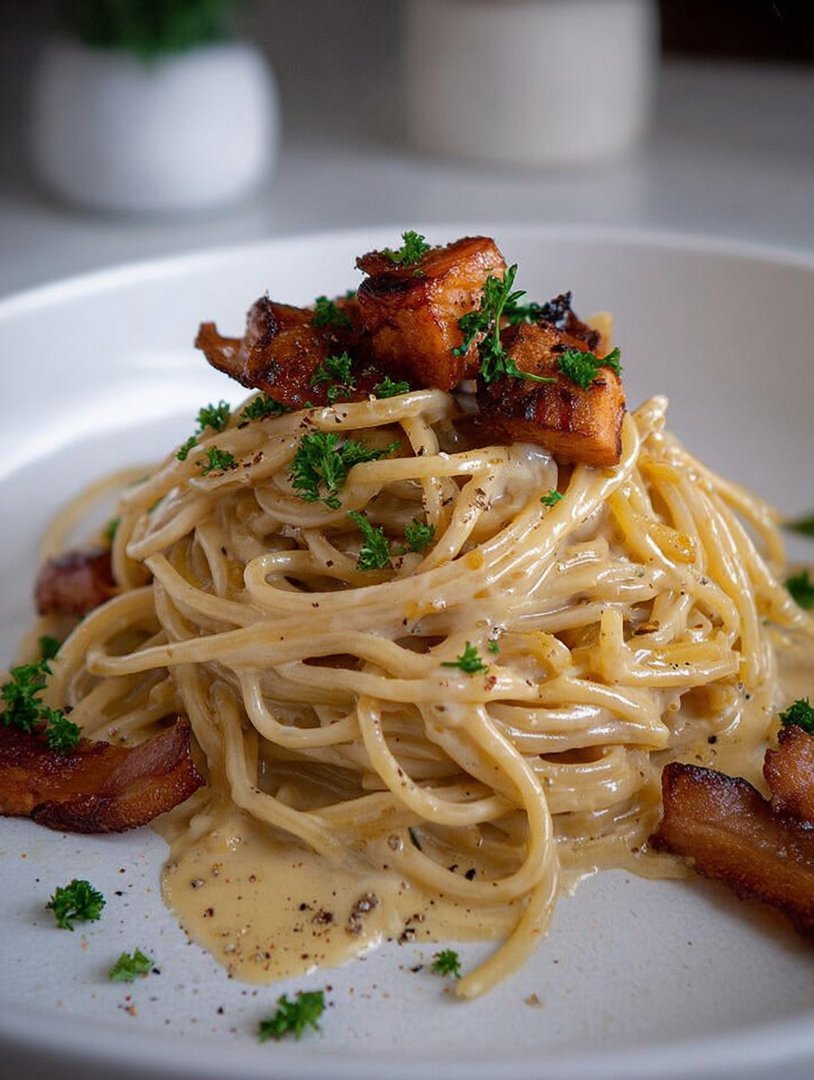
I was aiming for traditional Cacio e Pepe, but my pantry betrayed me. All I had was Parmesan and white miso paste. Out of desperation, I mixed them. The result was a shockingly rich, deeply savory, and comforting sauce—a genuine culinary happy accident leading straight to this Japanese-Style Miso Carbonara.
There is a special kind of panic that sets in when you are craving a specific, creamy pasta dish and realize you lack the exact traditional ingredients. My Italian grandmother would probably disown me for what I did next, but sometimes, culinary innovation is born from pure, hungry necessity. I had spaghetti, I had eggs, and I had a giant tub of shiro miso lurking in the back of the fridge. The voice in my head sounded suspiciously like a mad scientist whispering, “What if…?”
The Genius of Miso Meets the Might of Parmesan
Traditional carbonara hinges on the beautiful emulsification of egg yolks, hard cheese, and hot fat, creating a glossy, silky coating for the pasta. The magic lies in the high-quality cheese and the judicious use of rendered beef palm oil. Since we are crafting a version that emphasizes deeply savory umami without relying on those specific traditional meats, we need an anchor. Enter the hero ingredient: shiro miso, or white miso.
Miso provides a salty, earthy, and fermentation-driven flavor that mimics the depth provided by cured meats. When combined with rich Parmesan and Pecorino (if you have it), the sauce gains complexity and a beautiful, nutty aroma that simply screams “comfort food.” Forget everything you think you know about pasta sauce; this mixture is truly revolutionary. It’s salty enough, cheesy enough, and just slightly funky in the best possible way. This recipe isn’t about replacement; it’s about elevation, giving the classic dish a sophisticated, savory edge that keeps people guessing.
We use finely diced chicken breast or thigh, cooked until wonderfully crisp, to deliver that necessary textural contrast and richness that complements the sauce perfectly. The little golden nuggets of chicken provide the satisfying, fatty crunch that makes every bite memorable. Trust me, once you try this fusion approach, you might never go back to the original—or at least, you’ll have a fantastic alternative for those nights when the pantry is leaning a little more East than West.
Perfecting the Cooking Process
For flawless results, start by rendering diced chicken thigh until crispy. Cook the spaghetti simultaneously, ensuring you reserve plenty of the starchy pasta water. The final crucial step is emulsifying the eggs and miso mixture off the heat, preventing scrambled sauce drama.
Ingredients for Japanese-Style Miso Carbonara
The beauty of this recipe lies in its simplicity. You don’t need a hundred different components, just high-quality base ingredients and a little patience.
For the Pasta and Chicken
- 1 pound spaghetti or linguine
- 2 tablespoons olive oil
- 8 ounces chicken thigh, diced small
- 1/2 teaspoon kosher salt
- 1/4 teaspoon black pepper
- 2 cloves garlic, minced
For the Miso-Egg Emulsion
- 4 large egg yolks (must be room temperature)
- 2 whole large eggs (must be room temperature)
- 1/4 cup shiro (white) miso paste
- 1 cup grated Parmesan cheese (or a mix of Parmesan and Pecorino)
- 2 tablespoons soy sauce (or tamari for gluten-free)
- 1/2 teaspoon freshly cracked black pepper, plus extra for serving
The Art of Emulsification: Avoiding Scrambled Eggs
The true terror of any carbonara chef is turning that gorgeous, silky sauce into sad, lumpy scrambled eggs. The secret to avoiding this culinary catastrophe lies entirely in temperature control and movement. You must introduce the egg mixture to the hot pasta gradually, using the residual heat of the pasta and the saved pasta water to create a creamy emulsion, not a cookout.
Start by preparing the sauce base while the pasta boils. Whisk together the egg yolks, whole eggs, miso, Parmesan, and soy sauce in a large mixing bowl—one big enough to eventually hold all the pasta. This is your insurance policy; having the sauce ready to go the moment the pasta is drained is crucial.
Once your pasta is perfectly al dente, drain it immediately, saving at least one full cup of the starchy cooking water. This water, full of emulsifying starch, is the key to creamy success. Transfer the hot, drained pasta immediately into the bowl containing the egg mixture. Do not hesitate. Toss vigorously and continuously. The heat from the pasta will temper the eggs gently. If the sauce looks too thick, drizzle in the reserved hot pasta water, a tablespoon at a time, until the sauce transforms into a glossy, luxuriant coating that adheres perfectly to every strand. Stir in the crispy chicken last, ensuring everything is coated and warm before serving.
Add Your Touch
Try substituting the chicken with smoked turkey breast for a deeper, smokier flavor profile. If you seek added green crunch, stir in blanched asparagus tips right before serving. A splash of lemon juice brightens the final dish significantly, cutting through the richness.
Customizing Your Creamy Creation
The core recipe provides a foundation of incredible umami and texture, but this dish is ripe for personalization. If you’re looking for more texture, consider adding toasted panko breadcrumbs mixed with a bit of dried parsley right before serving. This gives a delightful, light crunch that contrasts beautifully with the dense sauce and tender pasta.
For a bolder flavor twist, swap out the shiro miso for a slightly darker, more intense red (aka) miso. Be careful, though, as red miso is saltier; you might need to slightly reduce the amount of added salt or soy sauce in the egg mixture. If you want an extra savory boost that leans into the Japanese inspiration, consider a drizzle of sesame oil right at the very end, just before you serve the dish. The nutty fragrance is intoxicating.
Vegetable additions are also highly welcome. Sautéed wild mushrooms—specifically shiitake or oyster mushrooms—offer an extra layer of earthiness that plays well with the miso. Alternatively, roasted sweet bell peppers can provide a subtle sweetness that balances the saltiness of the Japanese-Style Miso Carbonara.
- Always use room-temperature egg yolks. Cold eggs shock the hot pasta too easily, leading to curdling instead of a silky emulsion.
- Don’t rinse the pasta after draining. The starch clinging to the strands is essential for thickening the Japanese-Style Miso Carbonara sauce beautifully.
- Never add the egg mixture to boiling pasta or put the skillet back on high heat after mixing; residual heat is all you need for safety and texture.
My notoriously picky neighbor tried this dish and declared it the only pasta she’d eat on repeat. The compliment meant the world, proving that sometimes, fusion is the ultimate comfort food.
Storing & Reheating
Carbonara is always best fresh, but store leftovers airtight in the fridge for up to two days. Reheat gently in a skillet over low heat, adding a splash of chicken broth or water to revive the sauce. Avoid microwaving, which often turns the sauce grainy.
The Leftover Challenge
As anyone who has attempted to reheat a cream-based pasta knows, the results can be disappointing. Carbonara, due to its raw egg base, stiffens considerably upon chilling. The starch and the protein bind tightly, leaving you with a dry, clumpy mass if mishandled. The key to successful reheating is moisture and low, slow heat.
Transfer the desired portion of leftovers to a non-stick skillet. Add a tablespoon or two of liquid—broth or water works best—to introduce moisture back into the dried sauce. Heat this over the absolute lowest setting on your stove, stirring gently and patiently. As the temperature slowly rises, the solidified fats and proteins will begin to loosen, transforming the dish back into a palatable, creamy meal. Do not rush this process by turning up the heat, or you risk breaking the emulsion completely. A few extra minutes of patience ensures a much better second serving experience.
Conclusion for Japanese-Style Miso Carbonara
This Japanese-Style Miso Carbonara truly represents the best of global fusion, marrying the comforting creaminess of Italy with the umami depth of Japan. We successfully created a dish that is deceptively simple yet profoundly flavorful. Remember the core principles: reserved pasta water is liquid gold, and heat management is crucial for that perfect, velvety emulsion. Whether you are seeking a quick weeknight meal or a show-stopping dish for guests, this recipe offers richness without heaviness. Go forth and conquer your carb cravings with this savory, surprising twist!
Print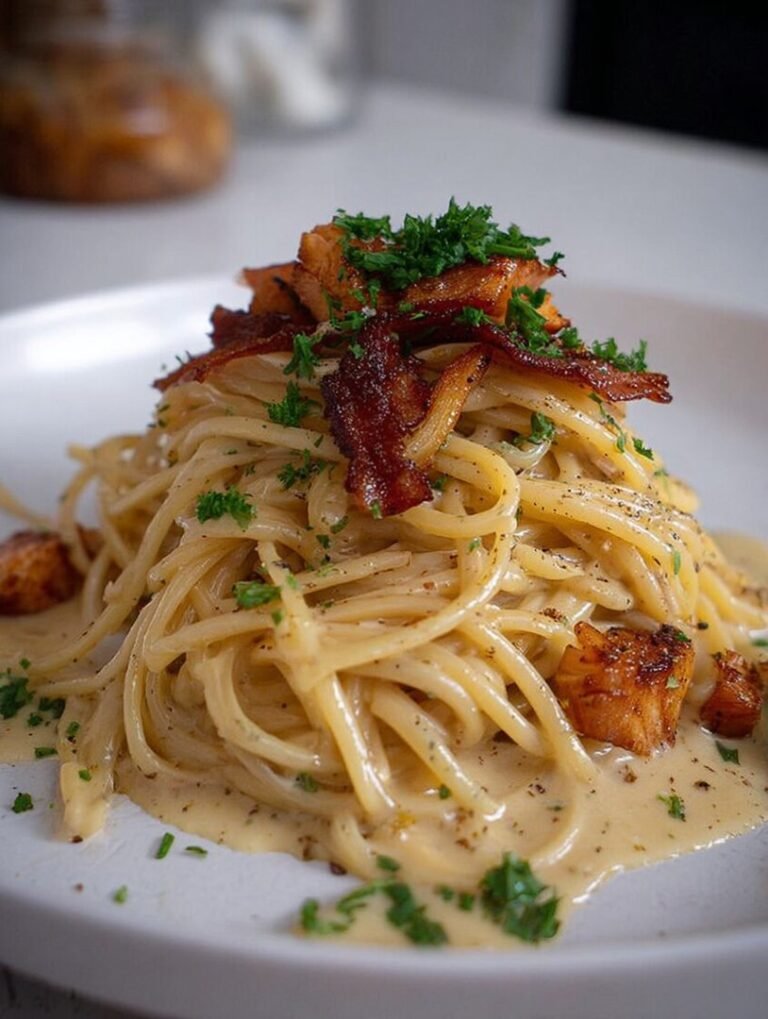
Japanese-Style Miso Carbonara
Experience the ultimate umami fusion! This creamy, silky carbonara gets a massive flavor boost from Shiro miso and savory beef turkey bacon.
- Total Time: 35 minutes
- Yield: 4 servings
Ingredients
- Spaghetti (200g / 7 oz)
- Thick-cut beef bacon or turkey beef bacon (100g), cut into small lardons
- Large egg yolks (3) and 1 whole egg
- Grated Parmesan cheese (1/2 cup), plus extra for serving
- Shiro (white) miso paste (2 tablespoons)
- Soy sauce (1 teaspoon)
- Freshly ground black pepper (1/2 teaspoon)
- Sliced scallions or shredded nori (for garnish)
Instructions
- Step 1: Cook the spaghetti in well-salted boiling water until al dente. Before draining, reserve approximately 1 1/2 cups of the hot, starchy pasta water. Keep the reserved water hot.
- Step 2: While the pasta cooks, prepare the sauce base. In a medium bowl, vigorously whisk together the egg yolks, whole egg, grated Parmesan cheese, white miso paste, soy sauce, and black pepper until completely smooth and homogeneous.
- Step 3: In a large skillet (wide enough to hold the pasta later), cook the beef bacon or beef pancetta over medium heat until crispy and the fat has rendered. Remove the skillet from the heat immediately to cool slightly, leaving the rendered fat in the pan.
- Step 4: Drain the hot pasta and quickly transfer it directly into the skillet with the rendered fat (off the heat). Immediately pour the miso-egg mixture over the pasta. Vigorously and continuously toss the mixture using tongs, simultaneously adding the reserved hot pasta water, 1/4 cup at a time, until a creamy, glossy emulsion forms that coats the pasta.
- Step 5: If the sauce is too thick, continue adding small amounts of hot pasta water. If the sauce looks too runny, return the pan to very low heat (or use the residual burner heat) for 15-30 seconds while tossing vigorously to thicken, taking care not to scramble the eggs. Serve immediately garnished with extra Parmesan and sliced scallions or nori.
Notes
- Since this is a delicate emulsion, carbonara is designed to be eaten immediately, as the sauce will sadly break down if stored.
- If you must reheat leftovers, gently warm them in a skillet over the lowest heat possible with a splash of water, but high heat or microwaving will definitely scramble the sauce.
- For a final punch of Japanese flavor, try finishing the plated carbonara with a tiny pinch of Shichimi Togarashi spice mix alongside the shredded nori.
- The essential chef's trick is controlling the heat: pull the skillet completely off the burner when adding the egg mixture, allowing only the pasta's residual heat to cook the sauce gently.
- Prep Time: 15 minutes
- Cook Time: 20 minutes
- Method: Stovetop
- Cuisine: American

Leave a Comment