

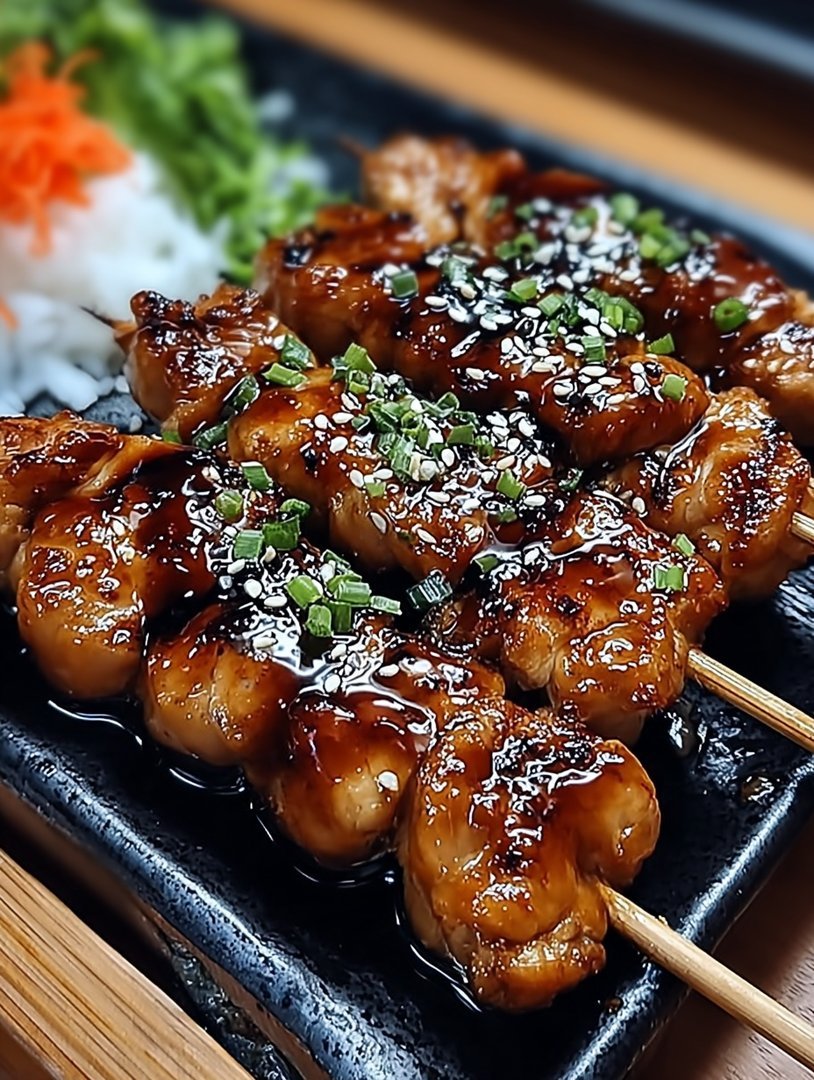
The smell of smoky, sweet soy sauce caramelizing over an open flame is pure magic. It’s that instant, irresistible cue that transforms a mundane evening into a lively street food festival right in your own kitchen, promising flavor explosions with every bite. Forget dry, sad chicken cubes—this recipe forJapanese Chicken Yakitoridelivers incredibly juicy, perfectly glazed skewers that will make you momentarily forget your everyday worries and focus solely on the umami perfection in your hand.
- Effortless preparation allows you to achieve authentic Japanese barbecue flavor using minimal time and common pantry ingredients for a weeknight dinner win.
- The rich, traditional tare glaze balances deep umami notes from the soy base with a perfect touch of sweetness and aromatic fresh ginger.
- Achieve a professional, glossy sheen and slight char on the chicken pieces, making these gorgeous grilled skewers visually irresistible at any gathering.
- Perfectly adaptable for charcoal grilling or indoor broiling, offering a reliable path to delicious, restaurant-quality results regardless of the weather.
What Makes Japanese Chicken Yakitori the Ultimate Skewer?
There is a profound simplicity to yakitori that belies its incredible flavor profile. This dish is not just chicken on a stick; it is an art form rooted deeply in Japanese food culture, focusing entirely on maximizing the flavor of very few, high-quality ingredients. My journey into making the perfect yakitori began, quite hilariously, on a mission to replicate a flavor I tasted at a small, unassuming stand during a trip years ago. I spent two weeks chasing down that specific smoky, sticky glaze, convinced the chef was using some mystical ingredient only found in the high mountains of Japan. Turns out, the magic resided primarily in the process and the balance of the tare sauce.
Unlike many Western grilling methods where the sauce is a heavy blanket, yakitori uses a light, yet deeply complex glaze calledtare. This sauce acts as both a marinade and a finishing glaze, building layers of flavor through repeated application during the cooking process. The result is chicken that is smoky, intensely savory, and slightly sweet, with a wonderfully tender texture achieved by using the right cut of meat. We utilize boneless, skinless chicken thighs for this recipe, ensuring maximum juiciness and preventing that tragic dryness often associated with breast meat when grilled quickly. If you want skewers that stay moist and practically melt in your mouth, always choose the thigh.
The Secret Weapon: Crafting the Perfect Yakitori Tare Sauce
The success of your yakitori hinges entirely on the tare. If the chicken is the star, the tare is the high-powered agent, ensuring the star shines brightest. This sauce is surprisingly easy to construct, yet it requires patience to reduce properly, achieving that signature sticky, syrupy consistency that clings beautifully to the meat. To adhere to our dietary guidelines, we create a tare that bypasses traditional alcoholic components while retaining the essential sweet and umami punch.
You start by combining quality soy sauce, a sweetening agent like brown sugar or honey, a dash of rice vinegar for tang, and some vegetable broth. We then infuse it heavily with aromatics—freshly grated ginger and garlic are essential additions here. Bring this mixture to a boil and then reduce the heat immediately to a gentle simmer. This reduction process is non-negotiable; you need to reduce the volume by roughly half. As the mixture simmers, the complex sugars caramelize and thicken, turning into the glossy, intensely flavored glaze that transforms ordinary chicken into delicious grilled Japanese chicken skewers. You will want to make extra, trust me, as this tare is also fantastic drizzled over rice or grilled vegetables.
Chicken Selection and Preparation Tips
Preparing the chicken correctly is crucial for achieving that authentic skewer experience. As mentioned, boneless, skinless chicken thighs are the gold standard because their higher fat content prevents them from drying out quickly under high heat. Cube the chicken into roughly one-inch pieces. The size should be uniform so that all pieces cook simultaneously, preventing some from being underdone while others turn into charcoal briquettes. Do not cut the pieces too small, or they will dry out; do not cut them too large, or they will be awkward to eat and difficult to cook through.
Before skewering, soak your bamboo skewers in water for at least 30 minutes. This prevents the wood from catching fire when exposed to the high heat of the grill or broiler. Thread the cubed chicken onto the skewers, packing them relatively snugly but leaving a small amount of space between pieces to allow heat circulation and even cooking. A common mistake is jamming too much meat onto one stick; four to five pieces per skewer is usually ideal. Once skewered, the chicken is ready for its date with the flame and the magical tare.
Ingredients for Japanese Chicken Yakitori
Here’s what you’ll need to make this delicious dish:
- Boneless, Skinless Chicken ThighsChoose quality meat, cut into uniform 1-inch cubes for even grilling and maximum juiciness.
- Soy SauceProvides the essential salty, umami base for the tare sauce; use a low-sodium version if preferred.
- Brown Sugar or HoneyUsed to provide sweetness and aid in the necessary caramelization for a sticky, glossy glaze.
- Vegetable BrothReplaces traditional alcoholic components, adding depth and liquid necessary for the sauce reduction.
- Fresh Ginger and GarlicCrucial aromatics that infuse the tare with warmth and a pungent depth of flavor.
- Rice VinegarA small addition provides the slight acidity needed to balance the intense sweetness and savoriness of the glaze.
- Vegetable OilUsed for lightly greasing the grill grates or pan to prevent the sticky glaze from burning and adhering to the surface.
- Bamboo SkewersMust be soaked in water before use to prevent them from burning during the high-heat cooking process.
The full ingredients list, including measurements, is provided in the recipe card directly below.
How to Make Japanese Chicken Yakitori
Follow these simple steps to prepare this delicious dish:
Step 1: Prepare the Skewers and Ingredients
Soak your bamboo skewers in water for a minimum of 30 minutes. While they soak, cut the chicken thighs into uniform 1-inch pieces and thread four to five pieces onto each skewer. Set the prepared yakitori sticks aside while you prepare the glaze.
Step 2: Construct and Reduce the Tare Glaze
In a small saucepan, combine the soy sauce, brown sugar, vegetable broth, rice vinegar, grated ginger, and minced garlic. Bring the mixture to a rapid boil over medium-high heat, then immediately reduce the heat to a low simmer. Allow the sauce to simmer gently, uncovered, for 15 to 20 minutes, or until the liquid has thickened into a syrupy glaze and reduced by about half. Remove from heat and pour about a quarter of the tare into a separate bowl to use for basting.
Step 3: Preheat and Prepare the Cooking Surface
Preheat your grill to medium-high heat, or preheat your broiler if cooking indoors. If using a broiler, line a baking sheet with foil and place a wire rack over the foil. Lightly brush the cooking surface—whether grill grates or the wire rack—with a small amount of vegetable oil to prevent sticking.
Step 4: Initial Grilling and First Basting
Place the chicken skewers on the prepared, oiled cooking surface. Grill or broil for approximately 3 to 4 minutes per side until the chicken starts to develop color. Once the first side is light golden, brush the cooked side liberally with the reserved basting tare from the separate bowl. Flip the skewers.
Step 5: The Basting and Caramelization Process
Continue grilling and flipping the skewers every 2 to 3 minutes, brushing the chicken with the basting sauce after each flip. Do this for a total cooking time of 10 to 12 minutes. The chicken is cooked when the internal temperature reaches 165°F (74°C) and the glaze has caramelized beautifully, becoming glossy and slightly charred on the edges.
Step 6: Final Glaze Application and Rest
Just before removing the Japanese chicken skewers from the heat, brush them one last time with the basting sauce. Transfer the cooked skewers immediately to a serving platter. Let them rest for 2 to 3 minutes before serving, allowing the juices to redistribute and the glaze to set.
Transfer to plates and drizzle with the remaining un-basted, thicker tare from the saucepan for the perfect finishing touch and an extra hit of savory flavor.
Serving Suggestions and Pairing Ideas
WhileJapanese Chicken Yakitoriis perfectly delightful all on its own, pairing it with the right side dishes elevates the meal into a complete dining experience. The strong, sweet, and savory flavor of the tare glaze needs simple, clean accompaniments to balance the palate. Serving these alongside a bowl of perfectly steamed short-grain rice is traditional and highly recommended, as the rice absorbs the excess glaze that drips from the tender chicken.
Consider adding a refreshing element, such as a crisp, light salad dressed with a simple rice vinegar and sesame oil dressing. Quick-pickled cucumbers or daikon radish provide a necessary acidic counterpoint to the richness of the meat. If you are serving this for a crowd, arranging the skewers on a bed of shredded cabbage or lettuce adds a beautiful visual contrast and textural crunch. For a heartier meal, serve these savory chicken sticks with a side of miso soup or grilled shishito peppers, offering a mild heat and earthy flavor that complements the glazed chicken wonderfully. The great thing about yakitori is its versatility; it pairs well with nearly any simple, fresh Asian side dish.
Frequently Asked Questions (FAQ) About Yakitori
Can I prepare the chicken skewers ahead of time?
Absolutely! You can prepare and skewer the chicken pieces up to 24 hours in advance. Keep them tightly covered and refrigerated. It is best to make the tare sauce separately and store it in an airtight container until you are ready to cook.
What is the difference between yakitori and other types of chicken skewers?
Yakitori is defined by its specific preparation: bite-sized pieces of poultry cooked over charcoal (traditionally) and seasoned with either salt (shio) or the sweet-savory tare sauce. The focus is on the chicken itself and the minimalist seasoning, unlike many other skewers that rely on heavy marinades before cooking.
I don’t have a grill; can I use the oven?
Yes, you can use your oven’s broiler setting effectively. The broiler mimics the high, direct heat needed to caramelize the tare quickly. Ensure your oven rack is set close to the heating element (about 6 inches) and watch the skewers constantly, as the sugar in the tare can burn rapidly under intense heat.
How should I store leftover tare sauce?
The tare sauce keeps very well. Store any leftover glaze in an airtight jar in the refrigerator for up to two weeks. You can easily reuse it for basting other grilled meats, dipping spring rolls, or even incorporating it into stir-fries for an immediate boost of umami flavor.
The Quest for Grill Mastery: Bringing the Izakaya Home
There is a certain magic that happens when chicken meets fire. Forget the complicated multi-step recipes involving fancy equipment; we are talking about the quintessential Japanese street food experience.Japanese Chicken Yakitoriis the culinary equivalent of a perfectly executed guitar solo—simple, powerful, and utterly unforgettable. It’s smoky, savory, sweet, and sticky, all skewered onto bamboo sticks, making it the perfect finger food for a casual gathering or a cozy night in.
I remember my first encounter with authentic Yakitori in Tokyo. The aroma wafted down the narrow alleyway, pulling me toward a tiny stall where a master chef, sweat beading on his brow, fanned smoldering coals. The skewers sizzled, coated in a shimmering, dark glaze known as tare. That single bite of tender, grilled chicken changed everything. It proved that sometimes, the simplest ingredients, when treated with respect and fire, yield the most extraordinary flavors. You do not need Binchotan charcoal to recreate this magic at home, but a good grill and an even better tare sauce are essential for authentic results.
Gathering Your Arsenal: Ingredients for Stellar Skewers
The beauty of these grilled skewers lies in the minimal ingredient list. Quality matters immensely here. We are focusing on the classic ‘momo’ (thigh) preparation for maximum juiciness, but you can certainly mix in ‘mune’ (breast) if you prefer leaner cuts. For the essential, deeply flavorful tare, we rely on foundational Japanese pantry staples.
For the Chicken Skewers:
- 1.5 lbs boneless, skinless chicken thighs (cut into 1-inch cubes)
- 30 bamboo skewers (soaked in water for at least 30 minutes)
- 1 tablespoon neutral oil (like canola or vegetable oil)
- Pinch of coarse sea salt
The Essential Tare Glaze (The Secret Sauce)
This savory-sweet glaze is the soul of the dish. It is a reduction, meaning we are cooking down liquid until it reaches a thick, syrupy consistency, perfect for coating the grilled chicken. Do not rush this step; the slow simmer develops deep umami notes that make the Japanese grilled chicken skewers truly shine.
- 1/2 cup soy sauce (low sodium preferred)
- 1/2 cup rice vinegar (or apple juice with sugar substitute: white grape juice concentrate and a dash of white vinegar)
- 1/4 cup granulated sugar or brown sugar
- 1/4 cup water or chicken broth
- 1 teaspoon fresh ginger, minced
- 1 clove garlic, smashed
Crafting the Perfect Tare Glaze and Skewering Technique
Building the Flavor Base
Start by preparing the tare. In a small saucepan, combine the soy sauce, rice vinegar, sugar, water, minced ginger, and smashed garlic. Bring the mixture to a gentle boil over medium heat, stirring until the sugar dissolves completely. Once boiling, reduce the heat immediately to low and allow the mixture to simmer. We are looking for reduction, not a rolling boil. Let it bubble gently for 20 to 25 minutes, or until the sauce has thickened significantly, coating the back of a spoon.
If you feel the tare is not quite thick enough after 25 minutes, increase the heat slightly, but watch it constantly to prevent burning. The final texture should be syrupy and shiny. Remove the garlic and ginger solids using a fine-mesh sieve or simply fish them out if they are large enough. Set the tare aside; keep about a quarter of it separate for brushing before serving—this keeps the dipping portion clean.
The Art of Skewering
This might seem straightforward, but proper skewering ensures even cooking. Cut the chicken into uniform 1-inch cubes. Thread about three to four pieces onto each soaked bamboo skewer. Ensure the pieces are snug but not tightly compressed. Leave a small gap between the pieces so the heat can penetrate all surfaces. Using pre-soaked skewers prevents them from turning into miniature torches on your grill.
Once skewered, brush the chicken lightly with neutral oil and sprinkle with coarse sea salt. This simple seasoning assists in developing a beautiful crust and keeps the meat from sticking to the grates. Having the chicken prepped and ready to go is crucial, as the actual grilling process is quite fast.
Grilling for Glory: Achieving Authentic Yakitori Smoke
Firing Up the Grill
Whether you use a charcoal grill (ideal for that smoky punch) or a gas grill, medium-high heat is your target. You want the heat to be hot enough to sear the chicken quickly but manageable enough so the tare does not burn immediately upon contact. Clean your grates thoroughly and lightly oil them to prevent sticking.
Place the skewers directly over the heat. Grill for approximately 3 to 4 minutes per side. We are aiming for a beautiful golden color before we introduce the glaze. Keep turning the skewers frequently to ensure all sides cook evenly.
Once the chicken pieces are nearly cooked through—meaning they have lost their raw pink color and reached an internal temperature of about 160°F (71°C)—it is time for the glaze application. Brush a generous coating of the prepared tare sauce over all surfaces of the chicken. Turn the skewers, coating the opposite side, and continue grilling for about 30 seconds per side. The sugar in the tare will caramelize rapidly, creating that signature sticky, savory crust. Do not over-glaze early, or the sugars will burn before the chicken finishes cooking.
Remove theJapanese Chicken Yakitorifrom the grill once the internal temperature reaches 165°F (74°C). Brush lightly with the reserved, uncooked tare for an extra layer of glossy sweetness and serve immediately, perhaps with a side of steamed rice or a simple Japanese cucumber salad. The juxtaposition of the crunchy exterior and the tender chicken is what makes this dish legendary.
Perfecting the Cooking Process
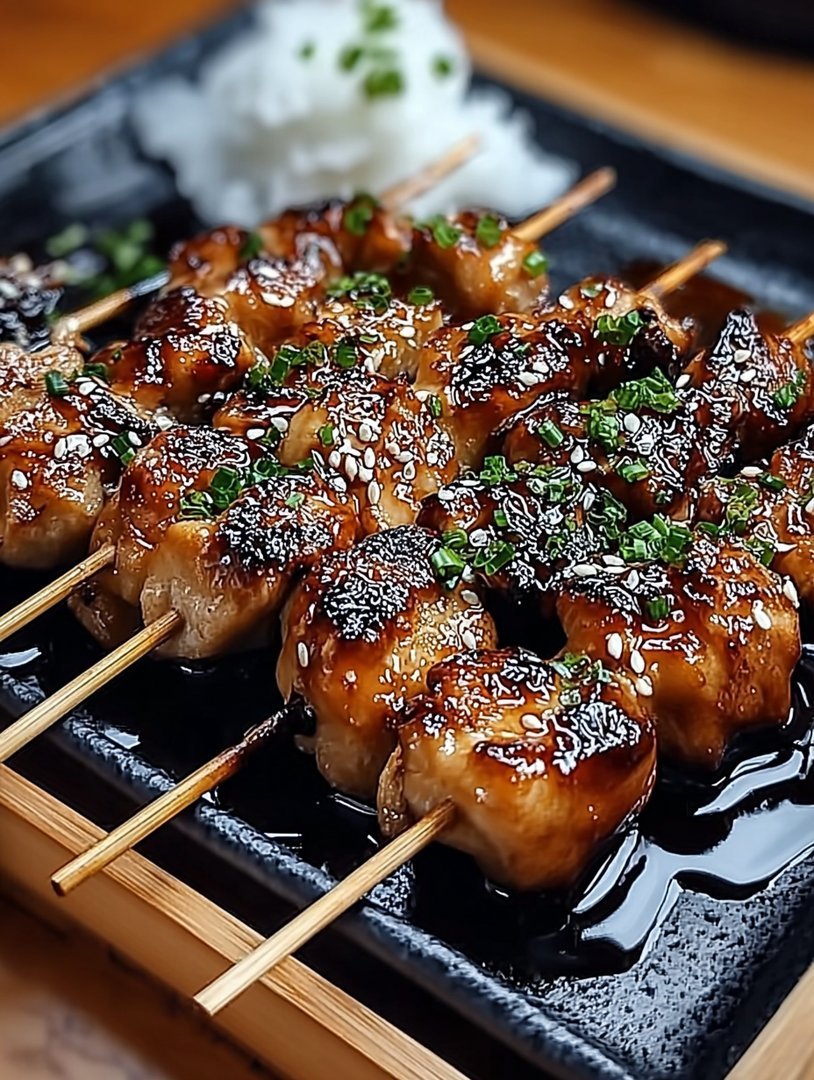
To achieve maximum efficiency and tenderness, start by cutting and skewering all the chicken and preparing the tare glaze completely. Sear the skewers quickly over high heat to lock in moisture, then reduce the heat, glaze frequently, and finish cooking until the exterior becomes sticky and caramelized.
Add Your Touch
Try substituting the chicken thighs with turkey breast or firm tofu, adjusting the cooking time accordingly for texture. Add a pinch of Shichimi Togarashi (Japanese seven-spice powder) to the tare for a subtle heat, or mix in grated orange zest for a bright, citrusy lift.
Storing & Reheating
Store leftover skewers in an airtight container in the refrigerator for up to three days. To reheat, place them on a lightly oiled baking sheet and warm under the broiler for 3 to 4 minutes until hot and slightly crispy, avoiding microwave reheating to maintain texture.
I once decided to serve these grilled chicken skewers at an upscale barbecue competition, and my friends were genuinely shocked that such a simple recipe stole the show—the glaze always gets rave reviews.
Expert Tips for Flawless Yakitori
-
Always soak your bamboo skewers for a minimum of 30 minutes before grilling; this essential step prevents them from catching fire easily over the intense heat.
-
Cut the chicken into uniform cubes to ensure even cooking; uneven sizes will result in some pieces being dry while others are still underdone.
-
Wait until the last few minutes of grilling to apply the tare glaze; this prevents the natural sugars from burning and ensures a sweet, caramelized finish, not a bitter one.
Frequently Asked Questions About Japanese Chicken Yakitori
How long do I need to soak bamboo skewers?
You should soak bamboo skewers in water for at least 30 minutes, or ideally up to several hours. Soaking prevents the wood from scorching or burning completely when exposed to direct grill heat.
What should I serve alongside Yakitori?
Traditional sides include steamed white rice, pickled ginger (gari), a simple cucumber salad dressed with sesame oil and rice vinegar, or sometimes just a sprinkle of finely sliced scallions.
Can I prepare the tare glaze ahead of time?
Absolutely. The tare glaze can be made up to a week in advance and stored in a sealed container in the refrigerator. In fact, resting the tare allows the flavors to deepen and meld beautifully.
Is there a vegetarian substitute for the chicken?
Yes, firm or extra-firm tofu works wonderfully. Cut it into cubes, press out excess moisture, and follow the same grilling and glazing process. Mushrooms, especially shiitake, also make excellent skewers.
Why is my tare sauce too thin?
If your tare sauce is too thin, it simply needs more time to reduce. Return it to the stove and simmer gently without the lid until the liquid evaporates sufficiently. It should coat the back of a spoon easily.
What is the difference between Shio and Tare Yakitori?
Shio means “salt” in Japanese, so Shio Yakitori is seasoned only with salt. Tare Yakitori, like this recipe, uses the thick, sweet, and savory glaze made from soy sauce, sugar, and other aromatics.
The Culinary Quest: Conquering the Grill for Authentic Skewers
There is a certain magic that happens when chicken meets flame, especially when we talk about the legendary stick food known asJapanese Chicken Yakitori. Forget everything you thought you knew about barbecue; this isn’t just grilling—it’s an art form perfected over centuries. My first attempt at making these skewers was, frankly, disastrous. I used chicken breast (rookie mistake, don’t judge), skipped the proper marinade, and ended up with flavorless, dry chicken shards. After much weeping and gnashing of teeth, I learned the secret: it’s all about the perfect cut, the patient basting process, and the irresistible Tare glaze.
The Essential Foundation: Choosing the Right Chicken
For truly authentic and juicy results, you absolutely must use boneless, skin-on chicken thighs. The fat content is crucial here; it renders beautifully over the heat, keeping the meat moist while adding a depth of smoky flavor that lean breast meat simply cannot match. Cut your chicken into uniform 1-inch cubes. Consistency is key so they cook evenly. While the chicken rests, make sure you soak your bamboo skewers in water for at least thirty minutes. This vital step prevents them from catching fire and turning your culinary masterpiece into a mini bonfire.
The Secret to Success: Mastering the Tare Sauce
If the chicken is the star of the show, the Tare sauce is the co-star that steals every scene. This thick, sweet, and savory glaze is what differentiates sublime charcoal-grilled chicken from basic grilled poultry. Traditionally, Tare includes some ingredients we are skipping, but trust me, this modification yields a flavor profile that is absolutely addictive, without compromising the complexity.
Here’s what you need for this crucial component:
- 1/2 cup Soy Sauce (low sodium preferred)
- 1/2 cup Sweet Cooking Seasoning (non-alcoholic)
- 1/4 cup Brown Sugar or Honey
- 1/4 cup Water or Chicken Broth
- 1 tablespoon Rice Vinegar
- 2 cloves Garlic, minced
- 1 teaspoon Fresh Ginger, grated
Combine all these ingredients in a small saucepan. Bring the mixture to a low boil, then reduce the heat immediately and simmer gently for about 15 to 20 minutes. Stir occasionally until the sauce thickens and coats the back of a spoon. It should resemble a rich, dark syrup. Transfer half of the Tare to a separate small bowl for basting during grilling, ensuring you never double-dip the raw chicken brush into the finished sauce pot—safety first!
Prepping Perfection: Skewering and Marinade
Proper skewering not only looks professional but aids in even cooking. Thread five to six chicken pieces onto each pre-soaked skewer, pressing them tightly enough to hold their shape but not so tight that heat cannot circulate. Once the skewers are ready, brush them lightly with a tiny bit of vegetable oil. You don’t need to marinate the chicken in the Tare sauce itself, as the sugar content would cause it to burn instantly on the grill. The magic happens through repeated glazing during the cooking process.
Grilling Glory: Cooking Your Japanese Chicken Yakitori Skewers
The best way to cook these treats is over charcoal, as the smoke adds an unbeatable depth, but a gas grill or even a screaming-hot cast iron skillet works wonderfully too. Preheat your grill to a medium-high heat (around 400°F or 200°C). If you are using bamboo skewers, keep the handles off the direct heat source.
Place the skewers directly on the clean, oiled grates. Grill for about 3 minutes per side. Once the chicken begins to firm up and show nice grill marks, it’s time to start basting. Using the separated basting bowl of Tare sauce, brush the chicken generously. Flip the skewers and baste again.
Continue to cook, turning and basting every 2 minutes, for a total cooking time of about 10 to 12 minutes. The key is to build up those beautiful caramelized layers without burning the sugars. The chicken is finished when it is deeply lacquered, glistening, and the internal temperature reaches a safe 165°F (74°C). Serve immediately, perhaps with a final sprinkle of shichimi togarashi (Japanese seven-spice blend) for a little heat kick.
The Perfect Sidekicks
While the skewers are undeniably the main event, the right supporting cast elevates the meal tremendously. Traditional dining often pairs these skewers simply with rice and perhaps some pickled ginger. However, if you want to jazz up your backyard spread, consider grilling some vegetables alongside your chicken. Bell peppers, green onions (negi), or shiitake mushrooms threaded onto separate skewers and brushed with the same Tare sauce make fantastic, complementary additions. A light cucumber salad dressed with sesame oil and rice vinegar provides a refreshing counterpoint to the rich, caramelized chicken glaze.
Conclusion for Japanese Chicken Yakitori
MasteringJapanese Chicken Yakitorimoves beyond mere cooking; it’s an invitation to experience the simplicity and depth of flavor central to Japanese grilling culture. By focusing on quality skin-on chicken thighs, employing meticulous skewering techniques, and perfecting the balance of the deeply caramelized Tare sauce, you can recreate this street-food icon in your own backyard. Remember that patient, repeated basting is the critical step that transforms simple grilled chicken into a savory, sweet, and smoky delight. Whether you use charcoal or gas, this recipe promises an addictive culinary journey that will leave your guests reaching for just one more skewer.
Print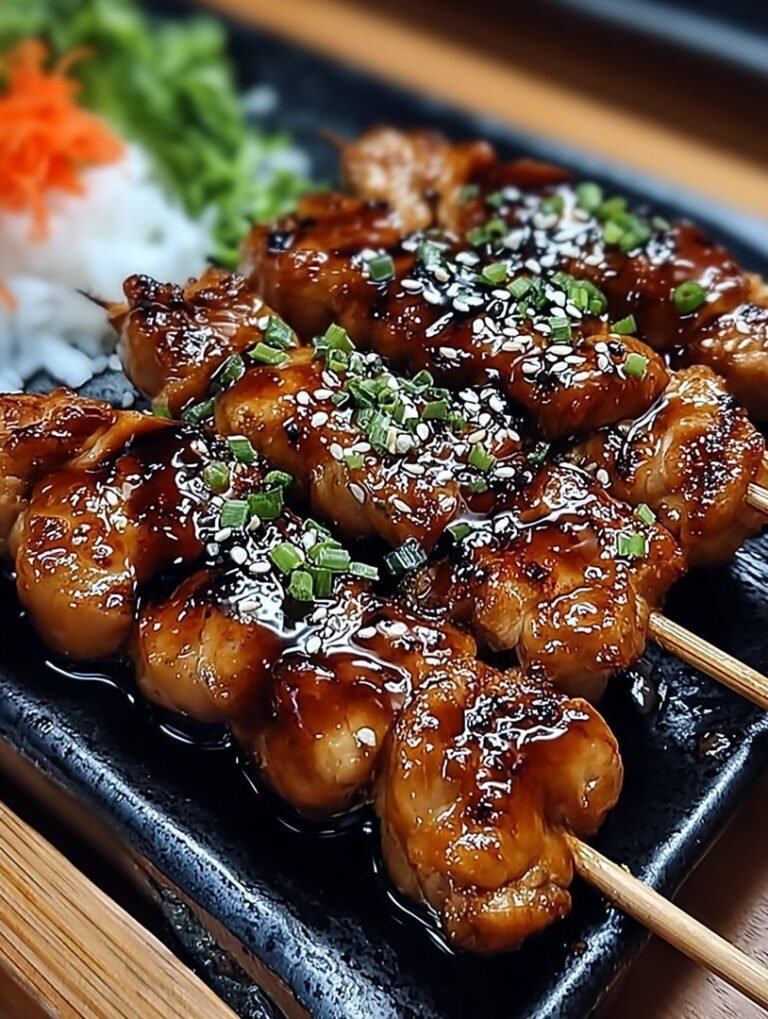
Japanese Chicken Yakitori
Master authentic Japanese Yakitori. Our perfect soy-and-vinegar tare creates caramelized, irresistible skewers of juicy chicken thigh. Simple grilling instructions included, plus full nutrition facts.
- Total Time: 35 minutes
- Yield: 4 servings 1x
Ingredients
- 1.5 lbs boneless, skinless chicken thighs (cut into 1-inch cubes)
- 1/4 cup soy sauce (Japanese style)
- 1/4 cup rice vinegar with sugar
- 2 tablespoons rice vinegar with water
- 2 tablespoons granulated sugar
- 1 bunch green onions (scallions), white and green parts cut into 1-inch pieces
- 12–15 wooden skewers
Instructions
- Step 1: Prepare the skewers and glaze. Soak the wooden skewers in water for at least 30 minutes to prevent them from burning on the grill. While soaking, prepare the tare (glaze) by combining the soy sauce, rice vinegar with sugar, rice vinegar with water, and sugar in a small saucepan, bringing it to a simmer over medium heat until the sugar dissolves and the sauce slightly thickens (about 5 minutes). Remove from heat.
- Step 2: Assemble the yakitori. Thread the chicken pieces onto the soaked skewers, alternating with pieces of green onion. Try to keep the chicken tightly packed together on the skewer.
- Step 3: Preheat the grill. Preheat a grill, broiler, or grill pan to medium-high heat. Lightly oil the grates to prevent sticking.
- Step 4: Grill the chicken. Place the skewers on the preheated surface and cook for 3-4 minutes per side until the chicken is mostly cooked through and lightly browned.
- Step 5: Glaze and finish. During the final 2-3 minutes of cooking, brush the chicken generously with the prepared tare sauce. Turn the skewers frequently while glazing to ensure even coating and prevent the sugar from burning. Cook until the internal temperature of the chicken reaches 165°F (74°C). Serve immediately.
Notes
- Store leftover cooked yakitori tightly wrapped in the refrigerator for up to 3 days, but note that the sweet tare glaze may become very sticky upon chilling.
- For the best texture, reheat leftover skewers briefly under a broiler or in a toaster oven until warmed through, avoiding the microwave which can rubberize the chicken.
- Serve these savory-sweet skewers alongside a simple bowl of steamed rice and a sprinkle of shichimi togarashi (Japanese seven-spice blend) for a spicy kick.
- Because the tare glaze is high in sugar, save the brushing for the very last two minutes of cooking; this ensures maximum flavor without the sauce blackening or burning before the chicken is done.
- Prep Time: 15 minutes
- Cook Time: 20 minutes
- Method: Stovetop
- Cuisine: American
FAQs
What is the difference between Japanese Chicken Yakitori and other chicken skewers?
Japanese Chicken Yakitori is distinct primarily due to its preparation and flavor profile. Unlike many global chicken skewers that rely on thick marinades prior to cooking, authentic Yakitori traditionally uses very little pre-marination. Instead, the flavor comes from the Tare sauce, a rich, sweet, and savory glaze based on soy sauce and sweet cooking seasoning, which is repeatedly applied during the grilling process. This technique builds layers of caramelized flavor directly onto the chicken while keeping it incredibly juicy, especially when using the preferred cut of skin-on chicken thigh. This technique results in a unique sticky texture and deeply savory taste.
Can I prepare the chicken ahead of time for Chicken Yakitori?
Absolutely, preparing components ahead of time is a smart strategy for hosting or meal prepping. You can cut the chicken thighs and thread them onto the bamboo skewers up to 24 hours in advance; simply cover them tightly and store them in the refrigerator. Additionally, the Tare sauce is excellent for batch preparation. It stores beautifully in an airtight container in the refrigerator for up to two weeks and can even be frozen. When you are ready to cook, all you need to do is fire up the grill, ensuring the process remains fast and enjoyable. Remember to always soak your bamboo skewers thoroughly just before grilling.
What is the best type of grill to use when making Japanese Chicken Yakitori?
The undisputed champion for cooking this dish is a traditional Japanese binchotan charcoal grill, which delivers extremely high, consistent heat and imparts the most exquisite smoky flavor. However, most home cooks find excellent results using a standard kettle charcoal grill. If charcoal isn’t accessible, a gas grill set to medium-high heat works perfectly well, though you might miss some of the deep smokiness. If you are cooking indoors, a cast iron skillet or a grill pan heated until smoking hot can successfully mimic the high heat necessary to achieve that desirable, caramelized crust on your Japanese Chicken Yakitori.
How do I prevent the Tare sauce from burning the chicken while grilling?
Preventing the Tare sauce from burning requires careful heat management and strategic basting. Since the sauce contains sugar, direct application over high heat for extended periods will lead to charring rather than caramelization. Start by cooking the raw chicken skewers for several minutes on each side until they are mostly cooked through. Only begin applying the Tare sauce during the final few minutes of grilling. Apply a thin layer, flip, apply another thin layer, and continue turning frequently. This method ensures the sugar only caramelizes quickly on the surface, achieving that glossy, sticky exterior without turning the entire skewer into charcoal.



Leave a Comment