

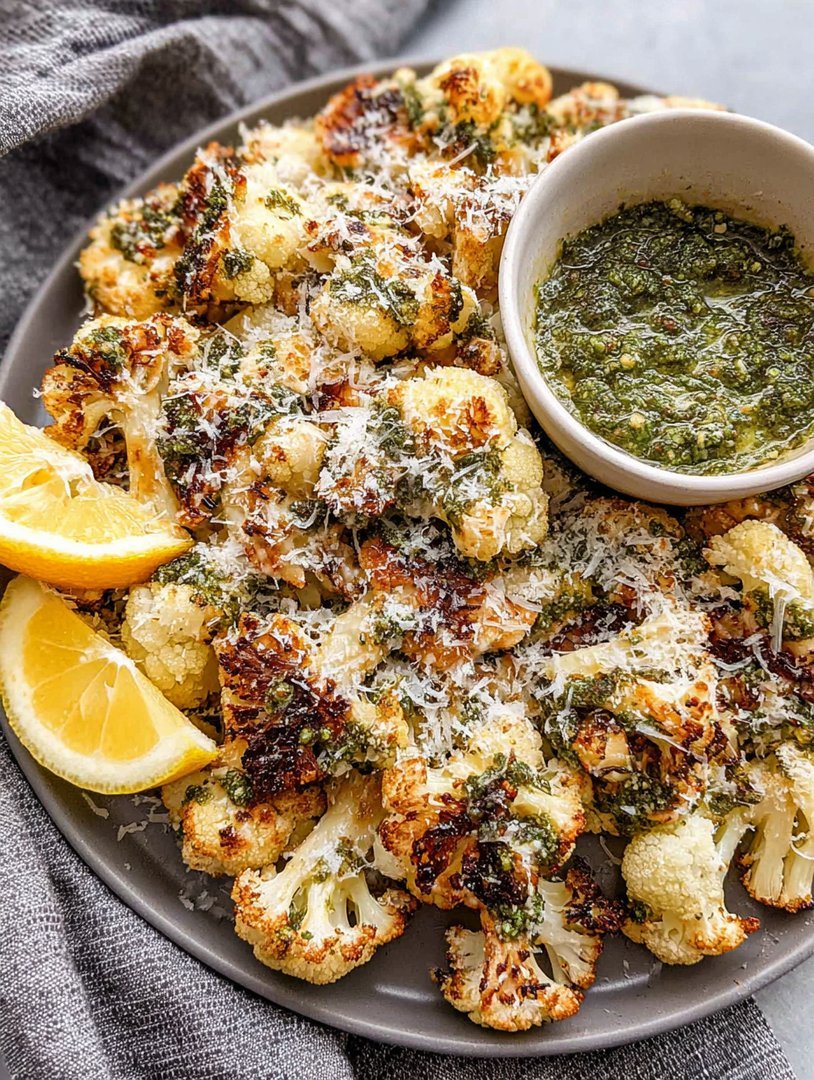
Forget mushy boiled vegetables; we’re achieving culinary gold today. That moment when nutty Parmesan meets aromatic basil truly transforms humble brassicas into a symphony of flavor.
Prepare your taste buds for the star of the show: the utterly addictiveParmesan Pesto Roasted Cauliflower. This is the side dish that will steal the main course’s spotlight.
- This recipe requires minimal hands-on time, demanding only 10 minutes of preparation before the oven handles the rest of the culinary heavy lifting.
- Experience a complex flavor profile featuring deep roasted nuttiness, sharp salty cheese, and the vibrant freshness of basil pesto.
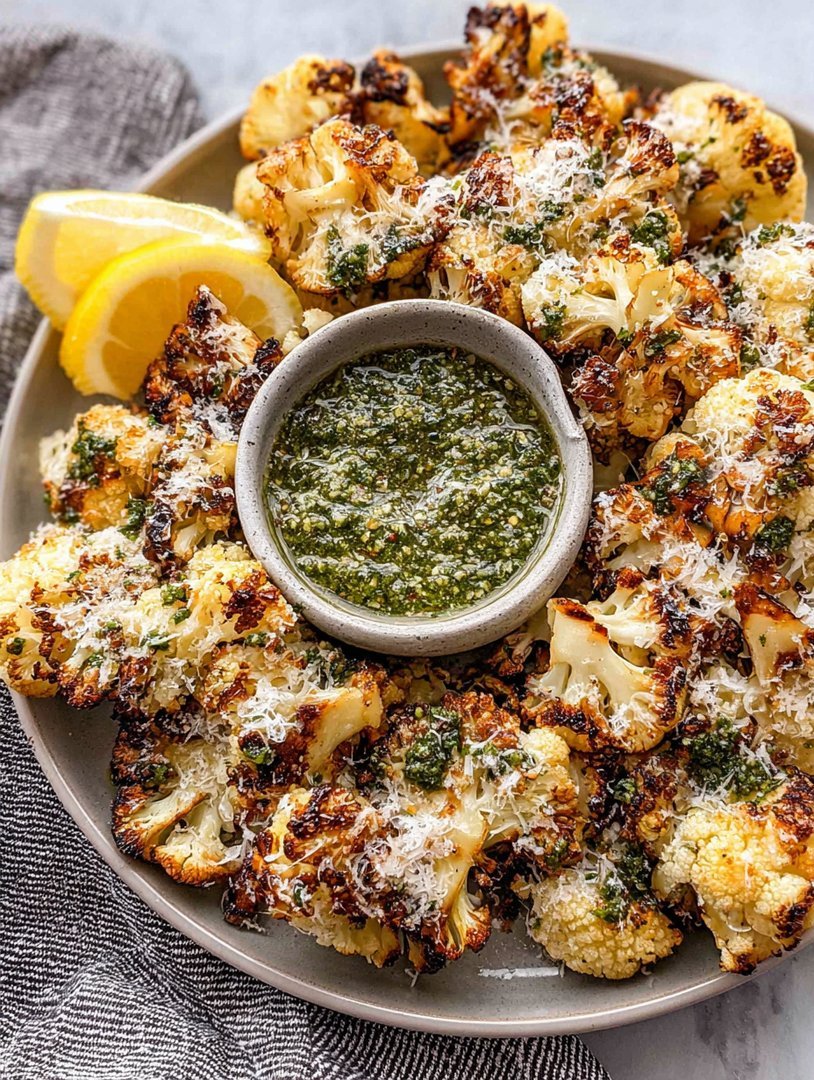
- The vibrant green pesto and golden-brown roasted florets create an incredibly appealing visual contrast perfect for any dinner table setting.
- These savory florets serve as an excellent, versatile accompaniment to grilled chicken breasts, slow-cooked lamb shoulder, or a hearty vegetarian pasta.
The Culinary Saga of Cauliflower
I remember a time when cauliflower was the dinner table underdog—white, bland, and usually relegated to the sad corner of the crudités plate, dutifully ignored by everyone hoping for cheese and crackers. It had no personality. It certainly didn’t inspire poetry. But like many forgotten heroes, cauliflower was simply waiting for the right moment, the right preparation, and the right vibrant sauce to unlock its full, glorious potential.
The transformation begins when you introduce two vital elements: high heat and high flavor. Roasting fundamentally changes the structure of this brassica, caramelizing its natural sugars and bringing out an inherent nuttiness that boiling simply washes away. When you pair that deep, earthy char with a punchy, savory coating like pesto mixed with aged Parmesan, you create a dish that is dangerously addictive. I once made a batch of thisParmesan Pesto Roasted Cauliflowerintending it to be a side for a major holiday meal. I turned my back for exactly three minutes to check the gravy, and when I returned, half the tray had vanished—eaten straight off the baking sheet by my notoriously vegetable-averse uncle. That, my friends, is the measure of success.
This recipe is proof that delicious, restaurant-quality food does not need to be complicated or time-consuming. We are talking about maximum flavor extraction for minimal effort. The secret lies in generously coating every nook and cranny of the florets with that luscious green gold before letting the oven work its magic, transforming the texture from firm to tender-crisp perfection. Get ready to convert skeptics, wow guests, and maybe fend off opportunistic relatives who try to steal your perfectly roasted bounty.
Why Roasting is Cauliflower’s Best Friend
Roasting isn’t just a cooking method; it’s a personality transplant for vegetables. When you subject cauliflower to intense dry heat, the Maillard reaction occurs, creating hundreds of new flavor compounds. Instead of the somewhat sulfurous, watery taste often associated with steamed cauliflower, you get depth, sweetness, and a delightful crispness on the edges. The high heat seals the moisture inside while crisping the outside, providing that essential textural contrast we crave. Furthermore, the oil in the pesto protects the surface from drying out while simultaneously infusing the flavor deep into the vegetable, ensuring every bite is a burst of salty, herbaceous goodness.
Ingredients for Parmesan Pesto Roasted Cauliflower
Here’s what you’ll need to make this delicious dish:
- Cauliflower HeadChoose a firm, white head that feels heavy for its size; it ensures maximum freshness and moisture.
- Prepared Basil PestoUse a high-quality jarred pesto or, ideally, a freshly made batch for the most vibrant basil and pine nut flavor.
- Parmesan CheeseFreshly grated Parmesan adds a sharp, salty depth and creates those coveted crispy bits during roasting.
- Olive OilExtra virgin olive oil helps the florets achieve the perfect level of char and prevents sticking to the baking sheet.
- Garlic PowderA small amount of garlic powder enhances the savory element without overpowering the fresh basil flavor of the pesto.
- Red Pepper FlakesThese are entirely optional but provide a lovely, subtle warmth that cuts through the richness of the cheese and pesto.
- Salt and Freshly Ground Black PepperUse these staple seasonings to adjust the overall flavor balance before the cauliflower goes into the oven.
The full ingredients list, including measurements, is provided in the recipe card directly below.
Preparation Secrets and Tips for Perfect Pesto
To ensure your roasted brassica dish reaches peak flavor performance, a little extra attention to preparation makes all the difference. We want the pesto coating to adhere beautifully and the cauliflower to roast evenly without turning soggy or pale. Start by making sure you dry your cauliflower thoroughly after washing, as any residual moisture will steam the vegetable rather than roasting it, defeating the purpose of seeking that beautiful caramelization. Also, don’t be shy with the pesto—this is not the time for subtlety; we need a generous coating to create that deep, flavorful crust.
Choosing the Right Cauliflower Head
When selecting your cauliflower, look for heads that are tightly packed and creamy white. Avoid any heads showing dark spots or signs of wilting, which indicate age and potential bitterness. The ideal head will yield beautifully uniform florets, which are crucial for even roasting. If the head seems too large, you can easily cut it in half and save the remainder for another recipe, such as a creamy vegetable soup. Remember that cutting the florets into similar sizes, roughly bite-sized pieces, guarantees that everything finishes cooking at the same time, preventing some pieces from burning while others remain undercooked.
Making the Pesto Sing
While jarred pesto is incredibly convenient, if you choose to make your own, consider enhancing it with a tiny squeeze of fresh lemon juice. The acidity of the lemon brightens the entire flavor profile, cutting through the richness of the olive oil and Parmesan. If you are using pre-made pesto, sometimes the consistency is too thick for coating vegetables effectively. If this is the case, simply whisk in an extra teaspoon or two of quality olive oil until the pesto is easily spreadable and coats the florets without clumping excessively. High-quality ingredients matter here, so opt for fresh basil if possible, as the volatile oils provide maximum aroma and flavor.
How to Make Parmesan Pesto Roasted Cauliflower
Follow these simple steps to prepare this delicious dish:
- Step 1: Preheat and Prepare the OvenPreheat your oven to a blazing 425°F (220°C). Line a large baking sheet with parchment paper to ensure easy cleanup and prevent the cheesy pesto from sticking to the pan. Ensure your oven is fully heated before placing the cauliflower inside, as initial high heat is key to proper caramelization.
- Step 2: Chop and Dry the CauliflowerCarefully wash the entire cauliflower head, then chop it into uniform, bite-sized florets. Pat the florets thoroughly dry using a clean kitchen towel or paper towels; removing moisture is critical for achieving a roasted, crispy texture.
- Step 3: Mix the Pesto CoatingIn a very large bowl, combine the basil pesto, olive oil, garlic powder, and a pinch of red pepper flakes (if using). Stir these ingredients vigorously until the mixture is smooth and evenly blended.
- Step 4: Coat and Season the FloretsAdd the prepared cauliflower florets to the bowl with the pesto mixture. Toss them gently using a rubber spatula or your clean hands, ensuring every piece receives a generous and even coating of the fragrant green sauce. Sprinkle generously with salt and pepper.
- Step 5: Roast the CauliflowerSpread the coated florets in a single layer across the prepared baking sheet. Do not overcrowd the pan; use two trays if necessary, allowing space between the florets promotes crispness. Roast for 15 minutes.
- Step 6: Add the Parmesan and Finish RoastingAfter 15 minutes, remove the tray from the oven. Sprinkle the freshly grated Parmesan cheese evenly over all the florets. Return the tray to the oven and roast for an additional 8 to 12 minutes, or until the cauliflower is tender-crisp and the Parmesan is golden brown and bubbling.
Transfer to plates immediately and serve warm alongside your favorite protein for the perfect finishing touch.
Serving Suggestions and Pairing Magic
The beauty of theParmesan Pesto Roasted Caulifloweris its incredible flexibility on the plate. It possesses enough assertive flavor to stand alone, yet it happily complements almost any main course. Because of its salty, savory richness, it pairs exceptionally well with lean, neutral proteins.
Try serving these savory florets next to perfectly pan-seared chicken cutlets seasoned simply with lemon and herbs. The acidity of the lemon cuts through the richness of the pesto, creating a beautiful balance. For a heartier meal, serve this roasted brassica dish alongside a slow-braised piece of succulent beef or a nicely crusted rack of roasted lamb. The deep, earthy flavor of the meat provides an excellent contrast to the bright, herbaceous notes of the basil and the saltiness of the Parmesan. If you are leaning toward a vegetarian main course, these florets work perfectly alongside a creamy white bean and tomato ragout or tossed into a simple pasta dish just before serving to add texture and an intense flavor boost. Remember, the goal is always balance—the vibrant green dish should complement, not compete with, the rest of your meal.
Frequently Asked Questions About Roasted Cauliflower
We’ve gathered answers to the most common queries about perfecting this popular side dish, ensuring your cooking process goes smoothly.
Can I prepare the cauliflower ahead of time?
Yes, you can chop the cauliflower florets up to 24 hours in advance. Store them in an airtight container in the refrigerator. However, wait to coat them with the pesto mixture until just before roasting to prevent the florets from becoming soggy.
What can I use instead of Parmesan cheese?
If you need an alternative to Parmesan, Pecorino Romano offers a sharper, saltier flavor that holds up well during roasting, or you could opt for nutritional yeast for a cheesy, savory flavor without dairy.
How do I store and reheat leftovers?
Store any leftoverParmesan Pesto Roasted Cauliflowerin an airtight container in the refrigerator for up to three days. To reheat and maintain crispness, spread the florets on a baking sheet and heat them in a 350°F (175°C) oven for about 5 to 8 minutes until warmed through.
Why is my roasted cauliflower not getting crispy?
The most common reasons for lack of crispness are overcrowding the pan (which causes steaming) or insufficient drying of the florets before coating. Ensure you use a large sheet pan, spread the pieces in a single layer, and always pat them dry before adding the pesto.
When Bland Meets Brilliant: A Cauliflower Redemption Story
If you think cauliflower is boring, I understand completely. For years, I viewed it as the pale, dutiful sidekick destined for lukewarm veggie trays or hiding under a heavy cheese sauce. It had potential, sure, but it never really reached for the stars. That all changed the day I decided to give this cruciferous powerhouse a serious flavor overhaul. I paired its subtle earthiness with the zing of fresh basil pesto and the savory crunch of Parmesan cheese. The result? A stunning transformation, delivering the crunchy, highly addictive side dish we now callParmesan Pesto Roasted Cauliflower.
This recipe isn’t just about making vegetables palatable; it’s about making them the star of the show. Roasting is the secret weapon here. High heat takes the humble white florets, caramelizes their edges until they are perfectly tender-crisp inside, and concentrates their flavor beautifully. When you combine that golden-brown transformation with a vibrant, garlicky pesto crust, you create something truly spectacular. Get ready to convert even the most skeptical vegetable critics at your table—they might even fight over the last crispy bits.
The Science of Supreme Flavor: Ingredients You Need
You don’t need a pantry full of obscure spices to achieve maximum flavor here. This dish thrives on simplicity and quality. Using high-quality store-bought pesto works fine, but making your own truly elevates the dish to gourmet status. Remember, the key to success lies in proper coating and achieving that deep, nutty roast. We want maximum texture and minimum sogginess.
Essential Components for the Perfect Bake
Gathering your components is the first step toward vegetable glory. Ensure your ingredients are fresh; the basil notes in the pesto are crucial to cutting through the richness of the cheese. Always use fresh ingredients when the recipe demands it—it makes a difference you can taste.
- One large head of cauliflower, cut into bite-sized florets.
- 4 tablespoons olive oil (extra virgin preferred).
- 1/2 teaspoon kosher salt and 1/4 teaspoon black pepper.
- 1/2 cup fresh basil pesto (look for a vibrant, good quality blend).
- 1/3 cup grated Parmesan cheese (plus extra for topping).
- 1 tablespoon lemon juice (freshly squeezed adds a needed brightness).
- Optional flavor boosters: a pinch of red pepper flakes for heat, or toasted pine nuts for added crunch.
Mastering the Roasting Process: Step-by-Step Instructions
Preparation is straightforward, but attention to detail during the mixing phase ensures every floret gets coated evenly. You want maximum surface area covered in that delicious green goodness, allowing the cheese to crisp up nicely during the cooking time. The roasting is broken into phases to prevent the pesto from burning prematurely.
Phase 1: Preparation and Initial Seasoning
First, preheat your oven to a robust 400°F (200°C). Line a large baking sheet with parchment paper to prevent sticking and simplify cleanup—a crucial step for avoiding the dreaded pesto cement effect on your pan. Next, thoroughly wash and dry the cauliflower. Moisture prevents caramelization, so give those florets a good pat down with a clean kitchen towel. Toss the dried florets in 2 tablespoons of olive oil, salt, and pepper right on the baking sheet. Spread them into a single, uncrowded layer; this space ensures they roast, not steam.
Phase 2: The First Roast
Roast the seasoned cauliflower for 15 minutes. This initial phase softens the cauliflower and starts the beautiful browning process before adding the delicate pesto. Pull the tray out of the oven after 15 minutes. You should see some golden edges starting to form, indicating concentrated flavor development. Keep the oven door closed to maintain temperature while you mix the coating.
Phase 3: Pesto and Parmesan Application
In a small bowl, combine the pesto, the remaining 2 tablespoons of olive oil, and the lemon juice. Pour this mixture over the partially roasted cauliflower. Use tongs or a spatula to toss everything vigorously, making sure the pesto adheres to every nook and cranny. Sprinkle the 1/3 cup of grated Parmesan cheese over the florets and mix again gently. Spread the Pesto Cauliflower Bake back into a single layer across the sheet. Remember, overcrowding is the enemy of crispiness, so always use two sheets if necessary to maximize air flow!
Phase 4: Finishing the Glory
Return the tray to the oven and roast for another 10 to 15 minutes. The specific time depends on how crispy you like your vegetables and how powerful your oven runs. Look for deeply browned edges and bubbling, slightly caramelized pesto. The cauliflower should feel fork-tender but retain a slight bite. Once removed from the oven, immediately sprinkle an extra dusting of fresh Parmesan over the hot vegetables. The residual heat will melt this finishing cheese beautifully. Serve this highly addictive side dish immediately for the best texture and flavor explosion.
Pairing Perfection: Turning a Side Dish into a Feast
While this recipe for roasted cauliflower is powerful enough to stand on its own, it truly shines when paired thoughtfully. Because the flavor profile is rich, savory, and herbaceous, it complements lean proteins and bright, simple starches wonderfully. Think of it as the sophisticated, vibrant companion to almost any weeknight meal or holiday gathering. The sharp cheese and intense basil provide a perfect counterpoint to simpler main courses.
Dinner Ideas That Complement Pesto Cauliflower
- Lemon Herb Grilled Chicken:The acidity and simple seasoning of the chicken contrast beautifully with the richness of the pesto and cheese, making for a balanced meal.
- Creamy Tomato Pasta:Use this cauliflower as a textural and flavor counterpoint to a smooth, sauce-heavy pasta dish, offering necessary crunch.
- Simple Lamb Steaks:The powerful, earthy flavors of lamb hold up excellently against the garlic and basil in the pesto, creating a memorable flavor profile.
This dish also makes incredible leftovers, transforming into a delicious component for lunch bowls. Chop up the leftover florets, mix them with quinoa, a handful of arugula, and a light vinaigrette for a quick, fulfilling midday meal that you will actually look forward to eating. Don’t be afraid to experiment with adding sundried tomatoes or capers for an extra layer of Mediterranean flavor.
Troubleshooting and Customization Secrets
Sometimes, achieving that perfect roast requires a little finesse. If your cauliflower comes out mushy or soggy, chances are you skipped the crucial step of thoroughly drying the florets, or your oven temperature was running too low. High heat is mandatory for browning and crisping. Don’t be afraid of a little smoke in the final minutes—that’s just the flavor gods smiling upon your culinary efforts, creating those crispy, dark edges everyone loves.
Perfecting the Cooking Process
Start by preheating the oven and preparing the cauliflower florets, ensuring they are completely dry. Conduct the initial oil and salt roast first to soften them; apply the sensitive pesto and cheese mixture only for the final 15 minutes to prevent burning and achieve optimal crust formation quickly.
Add Your Touch
Try adding toasted pine nuts or sunflower seeds for extra crunch and texture after roasting. If you need a dairy-free version, swap the Parmesan for nutritional yeast, or use toasted breadcrumbs mixed with garlic powder for a rich, crunchy topping instead of the cheese.
Storing & Reheating
Store leftovers in an airtight container in the refrigerator for up to four days. Reheat this delicious side dish on a baking sheet at 350°F (175°C) for 8 to 10 minutes, avoiding the microwave, which will turn the desired crispy crust mushy quickly.
My friend once refused to eat green vegetables. I served him this cauliflower without telling him what it was, and he demanded the recipe before finishing the plate. That’s how I knew I had a winner.
Chef’s Expert Tips for Maximum Flavor
- Do not overcrowd the baking sheet; use two sheets if necessary to ensure hot air circulates freely around every single floret, guaranteeing maximum crispiness.
- Ensure your pesto is refrigerated and thick; thin, oily pesto will slide right off the cauliflower and burn on the parchment paper before the vegetable has cooked.
- Save a tablespoon of Parmesan to sprinkle on immediately after removing the pan from the oven; the residual heat helps the cheese melt slightly, creating amazing texture.
Common Questions About Parmesan Pesto Roasted Cauliflower
How do I prevent the pesto from burning?
The trick is timing. You introduce the pesto only halfway through the roasting process. Roasting the cauliflower plain first allows it to soften and brown, and then the pesto only needs 10 to 15 minutes to toast and infuse its flavor without turning black.
Can I prepare the cauliflower ahead of time?
You can cut the cauliflower florets up to a day in advance and store them dry in an airtight container in the refrigerator. However, always wait to mix them with oil and pesto until immediately before they go into the hot oven for cooking.
What if I don’t have fresh Parmesan cheese?
While fresh grated Parmesan offers the best melt and flavor for this roasted vegetable side, you can use pre-shredded or even a high-quality powdered cheese, but note that the texture and crust formation may vary slightly when using a dry powder.
Conclusion for Parmesan Pesto Roasted Cauliflower
This savory vegetable dish truly transforms humble cauliflower into a star main course or an unforgettable side dish. The robust garlic and basil notes of the pesto combine beautifully with the salty, nutty crunch of the Parmesan, creating a flavor bomb that is far from boring. Whether you are aiming for a quick weeknight dinner or need an easy crowd-pleasing dish for your next gathering,Parmesan Pesto Roasted Caulifloweris your answer. It’s simple, highly customizable, and delivers maximum flavor with minimal effort. Give this recipe a try and watch even the pickiest eaters ask for a second helping!
Print
Parmesan Pesto Roasted Cauliflower
Crispy, oven-blasted cauliflower coated in savory basil pesto, garlic, and rich Parmesan. This effortless side dish roasts quickly at 400°F.
- Total Time: 35 minutes
- Yield: 4 servings 1x
Ingredients
- 1 large head cauliflower, cut into bite-sized florets
- 1/2 cup basil pesto (store-bought or homemade)
- 2 tablespoons olive oil
- 1/4 cup grated Parmesan cheese, divided
- 1 teaspoon garlic powder
- 1/2 teaspoon kosher salt
- 1/4 teaspoon freshly ground black pepper
Instructions
- Step 1: Preheat the oven to 400°F (200°C) and line a large baking sheet with parchment paper for easy cleanup.
- Step 2: In a large bowl, toss the cauliflower florets with the olive oil, garlic powder, kosher salt, and black pepper until evenly coated. Spread the florets in a single layer on the prepared baking sheet.
- Step 3: Roast the cauliflower for 15 minutes, allowing it to soften and begin to brown.
- Step 4: Remove the baking sheet from the oven. Drizzle the pesto over the cauliflower and toss gently to ensure every piece is coated. Sprinkle 3 tablespoons of the Parmesan cheese over the mixture.
- Step 5: Return the baking sheet to the oven and continue roasting for an additional 10–12 minutes, or until the cauliflower is tender and the Parmesan cheese is melted and lightly golden.
- Step 6: Remove from the oven and garnish immediately with the remaining tablespoon of Parmesan cheese before serving hot.
Notes
- To revive the crispy edges, reheat leftover cauliflower in a 350°F (175°C) oven or air fryer for 5-7 minutes instead of relying on a microwave, which can make it soggy.
- The key to preventing burnt pesto is adding it only after the cauliflower has already roasted for 15 minutes, ensuring the vibrant basil flavor isn't dulled by excessive heat.
- For a complete vegetarian meal, try serving this vibrant side tossed with cooked pasta or mixed into warm farro or quinoa.
- Store leftovers in an airtight container in the refrigerator for up to 3 days, but note that the texture will naturally soften significantly once chilled.
- Prep Time: 15 minutes
- Cook Time: 20 minutes
- Method: Stovetop
- Cuisine: American
FAQs
Why did my roasted cauliflower turn soggy instead of crispy?
Achieving that perfect, crispy exterior is all about moisture control. If your cauliflower comes out soggy, you likely crowded the pan. Always ensure you are roasting in a single layer, giving each floret enough space to breathe and steam away excess water. Also, roasting at a high temperature (around 400°F or 200°C) is essential. Finally, pat the florets dry before tossing them in oil and seasoning. For the bestParmesan Pesto Roasted Cauliflower, start with dry ingredients and high heat for proper caramelization.
Can I make this dish if I need a dairy-free alternative to Parmesan?
Absolutely! If you require a dairy-free option, you can easily substitute the Parmesan cheese. Nutritional yeast is a fantastic replacement, providing a similar savory, umami flavor often described as ‘cheesy.’ Use about half the volume of nutritional yeast compared to the measured Parmesan, as its flavor is quite concentrated. Alternatively, a sprinkle of toasted, chopped walnuts or pine nuts after roasting can add the texture and rich flavor depth that the cheese usually provides. This ensures everyone can enjoy a delicious variation of the Pesto Cauliflower dish, regardless of dietary needs.
How should I store leftoverParmesan Pesto Roasted Cauliflowerand reheat it?
Store any leftovers in an airtight container in the refrigerator for up to three days. When reheating, avoid the microwave, as it will make the texture unpleasantly soft and mushy. The best method is to use your oven or a toaster oven. Spread the leftover florets on a baking sheet and heat them at 350°F (175°C) for about 5 to 10 minutes until warmed through and the edges begin to crisp up again. This secondary roasting process helps revitalize the crunchy texture and brings back the intense flavor of the pesto and cheese, making leftovers taste nearly fresh.
What is the ideal temperature and cooking time for the best results?
The secret to perfectly cooked cauliflower is high heat, which caramelizes the edges quickly without overcooking the center. Set your oven temperature to 400°F (200°C). Depending on the size of your florets, the total cooking time will typically range from 20 to 25 minutes. We recommend adding the pesto and Parmesan in the last five minutes of cooking. This technique prevents the pesto from burning and allows the cheese to melt and crisp slightly without becoming overly browned. Always check for fork-tenderness and a deep golden char around the edges for the ultimate flavor profile.


Leave a Comment